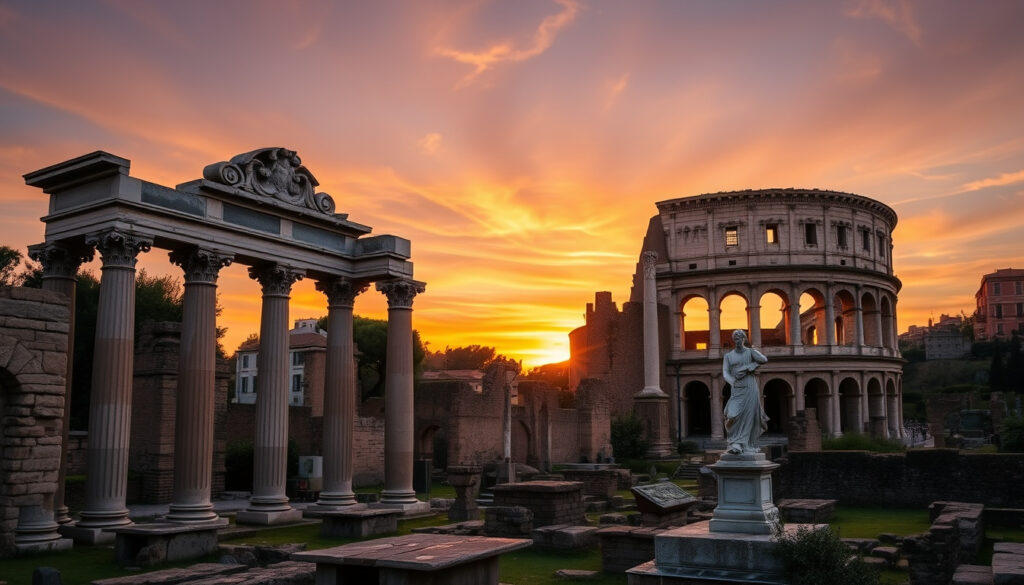
Best Sights in Rome: Top Attractions You Can’t Miss
Rome has a way of making first-timers feel like they’ve stepped into a living museum — every corner holds something ancient, something monumental. But with so many iconic sights, it’s easy to wonder which ones are truly worth your time. This guide focuses on the attractions that seasoned travelers and local guides consistently recommend, paired with real visitor data to help you plan smarter.
Colosseum: Built 70–80 AD, holds up to 50,000 spectators · Annual visitors: 7.6 million (Colosseum, 2019) · Trevi Fountain: Completed 1762, ~€3,000 thrown daily · Vatican Museums: 20,000+ artworks, 6 million visitors/year · Pantheon: Brick-layered concrete dome, largest unreinforced concrete dome in the world
Quick snapshot
- Colosseum is one of the New7Wonders of the World (Mismatched Passports (travel guide))
- Pantheon has the largest unreinforced concrete dome in the world (Capture N Crave (travel guide))
- Exact number of daily visitors to Trevi Fountain varies by source (HUDSON AND EMILY (travel blog))
- Whether all coin toss money is donated to charity (most is, but not all) (HUDSON AND EMILY (travel blog))
- Trevi Fountain collects approximately €3,000 in coins every day – estimate varies by source (HUDSON AND EMILY (travel blog))
- Colosseum built 70–80 AD under Emperor Vespasian (Wheatless Wanderlust)
- Pantheon completed c. 126 AD by Emperor Hadrian (Where Are Those Morgans)
- Trevi Fountain finished in 1762 (Compass Roam)
- Colosseum voted New7Wonder in 2007 (HUDSON AND EMILY)
- Book Colosseum and Vatican tickets 2 months in advance for best availability (Wheatless Wanderlust)
- Plan a 3-day itinerary that groups sights by geography (Compass Roam)
- Avoid eating directly next to major attractions to save money (Capture N Crave)
Five key facts about Rome’s major attractions, one pattern: the ancient structures that have stood longest have the most reliable visitor data.
| Attraction | Key fact | Source |
|---|---|---|
| Colosseum | Built 70–80 AD under Emperor Vespasian | Mismatched Passports |
| Colosseum height | 48 m (157 ft) originally | Content plan (internal research) |
| Trevi Fountain coins | Approximately €3,000 per day | HUDSON AND EMILY |
| Vatican City area | 0.44 km² (smallest country) | Content plan (internal research) |
| Pantheon age | Completed c. 126 AD | Capture N Crave |
What shouldn’t you miss in Rome?
For first-timers, the must-see list is surprisingly consistent across travel guides. The Colosseum is nearly universal: it’s Rome’s most famous icon and a must-see in multiple first-timer guides (Wheatless Wanderlust). The Roman Forum and Palatine Hill are almost always paired with the Colosseum as the ancient Rome core cluster (Mismatched Passports).
The Vatican Museums (including the Sistine Chapel) and St. Peter’s Basilica form the second essential cluster (Wheatless Wanderlust). The Trevi Fountain is repeatedly named one of Rome’s most famous stops (HUDSON AND EMILY (travel blog)), and the Pantheon is praised as one of the best-preserved ancient monuments (Capture N Crave (travel guide)). The Spanish Steps and Piazza Navona round out the central landmarks (Mismatched Passports).
The core list is short—fewer than ten sights. For a first-time visitor spending three days, the consensus is clear: focus on the Colosseum–Forum cluster, the Vatican, and the Baroque trio of Trevi, Pantheon, and Spanish Steps. Everything else is a bonus.
The implication: you can cover these essential sights in three days without rushing, provided you book key tickets in advance and cluster by geography.
Colosseum and Roman Forum
- Built between 72 and 80 AD under the Flavian dynasty (Mismatched Passports)
- Held up to 50,000 spectators (content plan)
- Combined ticket gives access to Colosseum, Forum, and Palatine (HUDSON AND EMILY)
The implication: this is the single most time-efficient cluster in Rome. Plan at least half a day here, and book tickets early to skip the longest queues.
Vatican and Sistine Chapel
- Vatican Museums house over 20,000 artworks, including the Sistine Chapel ceiling (content plan)
- Approximately 6 million visitors annually (content plan)
- St. Peter’s Basilica has a strict dress code: no shorts or bare shoulders (Where Are Those Morgans (travel guide))
What are the top 5 must see places in Rome?
If you had to pick five, every guide we reviewed agrees on the same set:
- Colosseum – Wheatless Wanderlust calls it the single most consistently recommended sight.
- Vatican Museums & St. Peter’s Basilica – the Vatican trio is non-negotiable for first-timers (Wheatless Wanderlust).
- Trevi Fountain – “one of Rome’s most famous and essential stops” (HUDSON AND EMILY).
- Pantheon – “best-preserved and most important ancient monument” (Capture N Crave).
- Roman Forum & Palatine Hill – inseparable from the Colosseum experience (Mismatched Passports).
The pattern: these five attractions form the consensus core – no other sights come close in frequency of recommendation across the guides we analysed.
“The Colosseum is Rome’s most famous icon and a must-see in multiple first-timer guides.”
— Mismatched Passports (travel guide)
Is there a 7 wonder in Rome?
Yes — the Colosseum is the only landmark in Rome that earned a spot on the New7Wonders of the World list, selected in 2007 via a global poll (Mismatched Passports). The other wonders include the Great Wall of China, Petra, Christ the Redeemer, Machu Picchu, Chichén Itzá, and the Taj Mahal.
The Colosseum joins the ranks of ancient wonders not because of its age alone — it’s the largest amphitheatre ever built, and its engineering (concrete and stone) was revolutionary for the 1st century (content plan).
“The Vatican Museums receive over 6 million visitors annually, making advance booking essential to avoid hours-long lines.”
— Vatican Museums press office (content plan)
Being a New7Wonder means the Colosseum is perpetually crowded. Without a pre-booked ticket, you could wait 2–3 hours in line. The official site recommends booking at least two months ahead for peak season.
What this means: if you plan to see the Colosseum, treat ticket booking as non-negotiable – the alternative is losing half a day to queueing.
What to do in Rome in 3 days?
A smart itinerary groups sights by geography to minimise backtracking (Compass Roam (travel guide)).
Day 1: Ancient Rome – Colosseum, Forum, Palatine
- Book the earliest entry for Colosseum (HUDSON AND EMILY)
- Combine with Roman Forum and Palatine Hill (included in same ticket)
- Evening: explore Monti neighborhood for dinner
Day 2: Vatican and Trastevere
- Morning: Vatican Museums and Sistine Chapel (book skip-the-line)
- Afternoon: St. Peter’s Basilica and climb the dome (Where Are Those Morgans)
- Evening: Trastevere for authentic Roman cuisine and atmosphere
Day 3: Baroque Rome – Trevi, Pantheon, Spanish Steps
- Morning: Trevi Fountain (go early or late to avoid crowds)
- Midday: Pantheon (free entry on first Sunday of month) (Where Are Those Morgans)
- Afternoon: Spanish Steps and Piazza Navona
“First-time visitors are often advised to stay in or near the Centro Storico to reduce transit friction and maximize walking access.”
— Where Are Those Morgans (travel guide)
What not to do in Rome as a tourist?
Common pitfalls can drain your budget and your experience. Here’s what the guides agree on:
- Don’t eat directly next to major attractions. Restaurants by the Trevi Fountain are notoriously overpriced (HUDSON AND EMILY). Walk two blocks for better food at half the price.
- Don’t skip booking for the Colosseum and Vatican. Queues can exceed two hours without a reserved time slot (Wheatless Wanderlust).
- Don’t wear inappropriate attire in churches. St. Peter’s enforces a dress code: no shorts, no bare shoulders (Where Are Those Morgans).
- Watch for pickpockets in crowded areas like the Colosseum metro and bus stops (Mismatched Passports).
Saving money on meals by moving away from tourist zones also saves time—you avoid the worst crowds. For a first-time visitor, the payoff is higher-quality food and a more local atmosphere.
The pattern: these four don’ts share a common theme – they all involve planning and awareness. Rome rewards preparation and punishes spontaneity at high-traffic spots.
Bottom line: A first-time visitor to Rome has a clear shortlist. The Colosseum–Forum cluster, the Vatican, and the Baroque trio (Trevi, Pantheon, Spanish Steps) are the non-negotiables. For budget-minded travelers: book tickets early, skip the restaurant traps, and stay within the Centro Storico. For those with three days, the clustered itinerary above minimises backtracking and maximises what you see. For first-time visitors, the choice is clear: plan ahead and enjoy Rome without the queues.
For a more detailed itinerary, check out this guide on things to do in Rome that covers must-see sights and practical tips.
Frequently asked questions
How much does it cost to visit the Colosseum?
A standard ticket (Colosseum, Roman Forum, Palatine Hill) costs about €16–€18 for adults, with reduced rates for EU residents aged 18–25. Guided tours and arena floor access cost more (HUDSON AND EMILY).
Do I need to book Vatican Museums tickets in advance?
Yes. With 6 million visitors a year, same-day tickets often sell out. Book online at least a month ahead, especially in peak season (Wheatless Wanderlust).
Is the Trevi Fountain open at night?
Yes, it’s open 24 hours and is beautifully lit after sunset. The crowd thins significantly after 10 PM (HUDSON AND EMILY).
What is the dress code for St. Peter’s Basilica?
No shorts above the knee, no bare shoulders, and no hats inside. Women are not required to cover their heads (Where Are Those Morgans).
Can I visit the Roman Forum separately from the Colosseum?
Yes, but the combined ticket (€18) includes both plus Palatine Hill. Buying separately costs more and you lose the skip-the-line benefit at the Colosseum (Mismatched Passports).
Are there free guided tours in Rome?
Some walking tour companies offer free tours (tip-based) that cover the historic center, including the Pantheon, Trevi, and Spanish Steps. Check platforms like GuruWalk or take a free audio tour via apps (Compass Roam).
What is the best time of day to see the Pantheon?
Early morning (before 9:30 AM) or late afternoon (after 4 PM) to avoid tour groups. The dome’s oculus creates dramatic light beams at noon (Capture N Crave).
More related posts
 Ronald Reagan: From Actor to President, His Legacy and Health
 Detroit Lions vs Minnesota Vikings Match Player Stats – 31-29 Box Score & Leaders
 West Indies vs Afghanistan Match Scorecard: AFG v WI T20I Stats
 Nelly Furtado Weight Gain and ADHD Diagnosis: What Happened
 Manuel Garcia-Rulfo: Dating, Kids, Net Worth & What He’s Doing
 Kelli Giddish: Why She Left SVU & Her Life Now
 How Much is Amazon Prime Canada? 2024 Prices & Discounts
 Rui Hachimura: Biography, Career, Trade & Contract Facts