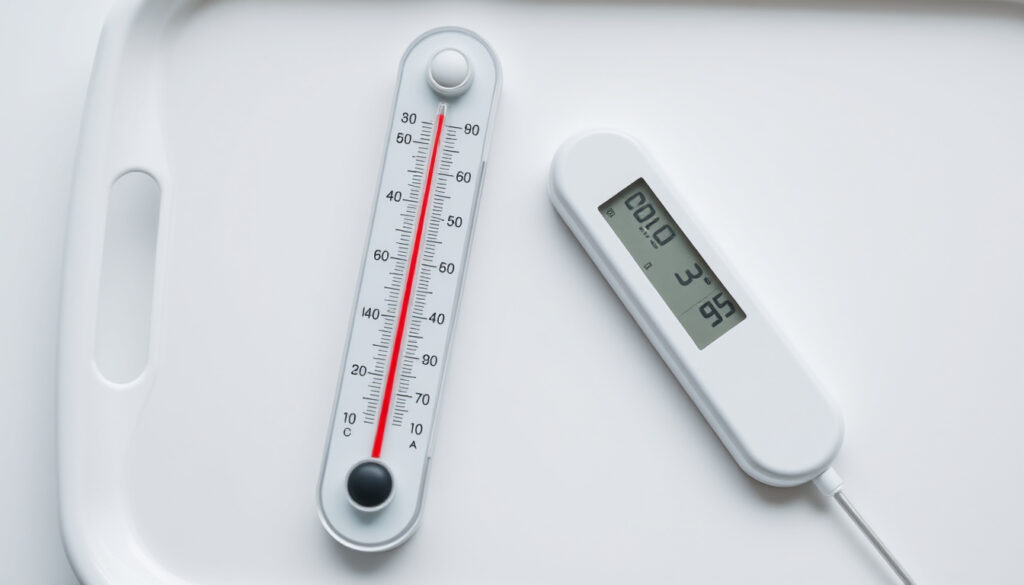
What Is Normal Body Temp? Range by Age, Fever & Hypothermia
You have probably heard your whole life that 98.6°F (37°C) is the gold standard for normal body temperature. But research and medical guidelines actually describe a range that shifts with age, the time of day, and even which thermometer you use.
Normal adult range: 36.1°C – 37.2°C (97°F – 99°F) ·
Average normal temperature: 36.7°C (98.6°F) ·
Fever threshold (adults): ≥38°C (≥100.4°F) ·
Low‑grade fever range: 37.5°C – 38°C (99.5°F – 100.4°F) ·
Hypothermia threshold: below 35°C (95°F) ·
Elderly average: slightly lower than younger adults
Sources: Nurse Next Door (home‑care provider) · Medical News Today (health news publisher) · My Health Alberta (government health service)
Quick snapshot
- Range: 36.1°C – 37.2°C (97°F – 99°F) for adults (Nurse Next Door)
- Average: 36.7°C (98.6°F) – historic baseline (Harvard Health)
- Varies by age, time of day, and measurement method (Medical News Today)
- Fever: ≥38°C (≥100.4°F) in adults (Mayo Clinic)
- Low‑grade fever: 37.5°C – 38°C (99.5°F – 100.4°F) (WebMD)
- In children: same thresholds, but rectal readings preferred (Harvard Health)
- Hypothermia: <35°C (<95°F) (Nurse Next Door)
- Mild hypothermia: 32°C – 35°C (89.6°F – 95°F) (Mayo Clinic)
- Sepsis can cause low temperature but is not diagnostic alone (Sepsis Alliance)
- Babies: 36.6°C – 38°C (97.9°F – 100.4°F) rectal (Harvard Health)
- Children: 36.1°C – 37.8°C (97°F – 100°F) oral (Medical News Today)
- Elderly: average ~36.2°C (97.2°F); less ability to regulate (Medanta (hospital network))
Six key facts, one takeaway: body temperature is a moving target, not a fixed point.
| Fact | Value | Source |
|---|---|---|
| Normal adult range (oral) | 36.1°C – 37.2°C (97°F – 99°F) | Nurse Next Door |
| Traditional ‘normal’ (Wunderlich, 1851) | 37°C (98.6°F) | Harvard Health |
| Modern average (2017 study) | 36.4°C – 36.7°C (97.5°F – 98°F) | Medical News Today |
| Fever definition (CDC, WHO) | ≥38°C (100.4°F) | Nurse Next Door |
| Hypothermia threshold | <35°C (95°F) | Nurse Next Door |
| Daily fluctuation | Up to 0.5°C (0.9°F) – lowest in morning, highest in late afternoon | My Health Alberta |
The pattern: the range of normal is wider than you were told, and fever starts higher than many assume.
What is normal body temperature?
- Normal body temperature is a range, not a single number (Nurse Next Door).
- The average adult temperature is around 36.7°C (98.6°F) (Harvard Health).
- Body temperature can fluctuate by up to 0.5°C (0.9°F) throughout the day (My Health Alberta).
- Measurement method (oral, rectal, armpit, ear) affects the reading (Medical News Today).
It is tempting to treat 98.6°F as a universal benchmark. Yet that value originates from a 19th‑century German physician who measured armpit temperatures in a relatively small sample. Modern studies—including a 2017 analysis of nearly 100,000 observations—show that the average oral temperature is closer to 97.9°F (36.6°C). The range that clinicians now consider normal spans about 97°F to 99°F (36.1°C to 37.2°C) for a healthy adult.
A single reading of 98.6°F does not mean you are “normal,” and a reading of 97.8°F does not mean you are running cold. Context—time of day, what you were doing an hour ago, and which site you measured—matters more than the absolute number.
How does body temperature vary during the day?
- Lowest in the early morning (around 4–6 a.m.) (My Health Alberta).
- Peaks in the late afternoon or early evening (Medical News Today).
- Difference of up to 0.5°C (0.9°F) between daily low and high (WebMD).
This circadian rhythm means a temperature of 37.2°C (99°F) at 6 p.m. may be perfectly normal, while the same reading at 6 a.m. might be worth noting.
What factors affect normal body temperature?
- Age: infants and young children run warmer; older adults run cooler (Medanta).
- Physical activity: exercise can temporarily raise core temperature by 1–2°C (Harvard Health).
- Hormonal cycle: women’s basal body temperature rises about 0.3–0.5°C after ovulation (WebMD).
- Measurement method: rectal reads ≈0.5°C higher than oral, axillary ≈0.3°C lower (Medical News Today).
Does 37.5 mean a fever?
- A temperature of 37.5°C (99.5°F) is generally considered a low-grade fever in adults (WebMD).
- Fever is defined as a body temperature ≥38°C (100.4°F) for adults (Mayo Clinic).
- Context matters: time of day, recent activity, and age can influence the reading (My Health Alberta).
That 37.5°C reading on your thermometer is above the typical healthy range but still below the official fever cutoff. Many guidelines label this a “low‑grade fever” and suggest watching for other symptoms before reaching for medication.
What temperature is considered a fever?
- Adults: 38°C (100.4°F) or higher (oral or rectal) (Mayo Clinic).
- Children (3 months–2 years): 38°C (100.4°F) rectal (Harvard Health).
- Elderly: may have serious infection at lower temperatures (Medanta).
For most adults, a temperature below 38°C (100.4°F) is not considered a true fever from a clinical standpoint, even if it feels warm to you.
Is 37.5 a low-grade fever?
Yes, most sources classify 37.5°C (99.5°F) as the start of a low‑grade fever. The range 37.5–38°C (99.5–100.4°F) is often called “low‑grade” and is associated with mild infections, stress, hormonal changes, or even just a warm day and a heavy meal.
When should you worry about a temperature of 37.5?
- If accompanied by symptoms: cough, difficulty breathing, rash, confusion, persistent vomiting (Mayo Clinic).
- If the temperature persists more than 3 days (Harvard Health).
- In children under 3 months: any fever ≥38°C (100.4°F) warrants a call to the doctor (Harvard Health).
A low‑grade fever alone is rarely a cause for alarm, but when combined with other symptoms it can signal a treatable infection. The key is to look at the whole picture, not just the number.
The trade‑off: treating a low‑grade fever with antipyretics may mask symptoms that help you and your doctor understand the underlying cause.
What is a low-grade fever?
- Low-grade fever is typically defined as 37.5°C – 38°C (99.5°F – 100.4°F) (WebMD).
- Common causes include mild infections, stress, and hormonal changes (Harvard Health).
- Low-grade fevers often resolve on their own and do not always require medication (Mayo Clinic).
Think of a low‑grade fever as your body’s subtle alarm — it’s a signal that something is off, but it doesn’t necessarily mean you need to panic. Many viral infections, minor inflammatory conditions, and even emotional stress can trigger this mild temperature elevation.
What are the causes of a low-grade fever?
- Viral infections (common cold, flu, COVID‑19) (Harvard Health).
- Bacterial infections (urinary tract, sinus, ear) (Mayo Clinic).
- Inflammatory conditions (rheumatoid arthritis, lupus) (WebMD).
- Hormonal factors (ovulation, pregnancy, hyperthyroidism) (Medical News Today).
- Environmental heat, intense exercise, emotional stress (My Health Alberta).
How long does a low-grade fever last?
Typically 1 to 3 days for acute infections. If it persists beyond a week or comes and goes for weeks, it’s worth discussing with a doctor because it may indicate a chronic condition or more serious illness.
Should you treat a low-grade fever?
Not necessarily. Fever is part of your immune system’s defense. Treating a low‑grade fever with paracetamol or ibuprofen can provide comfort but may also blunt the immune response. The general advice is to treat if you are uncomfortable, but not to chase a “normal” temperature.
Why this matters: a low‑grade fever is often self‑limiting. The goal is not to eliminate the fever but to monitor it for progression while staying hydrated and rested.
What is the ideal body temperature by age?
- Babies (0–2 years): rectal temperature normally 36.6°C – 38°C (97.9°F – 100.4°F) (Harvard Health).
- Children (3–10 years): oral temperature about 36.1°C – 37.8°C (97°F – 100°F) (Medical News Today).
- Elderly (65+): average temperature is slightly lower, around 36.2°C (97.2°F) (Medanta).
- Body temperature regulation becomes less efficient with age (Nurse Next Door).
Newborns have a higher average temperature and less ability to shiver, so they rely on external warmth. Children’s temperatures can swing more widely. Older adults often run cooler and may not mount a high fever even with serious infections.
What is normal body temperature for babies?
Rectal temperature is the gold standard for infants. The normal range is 36.6–38°C (97.9–100.4°F). Because their hypothalamic control is immature, environment and clothing can easily affect readings.
What is normal body temperature for children?
Once a child can cooperate with an oral thermometer, the typical range is 36.1–37.8°C (97–100°F). However, ear and temporal artery readings tend to fall in between oral and rectal values.
What is normal body temperature for the elderly?
People over 65 generally have a lower core temperature. With reduced muscle mass and circulation, their bodies don’t generate heat as efficiently. An “average” of 36.2°C (97.2°F) is common, and a fever may be defined as ≥37.8°C (100°F) in some guidelines.
An elderly person with a temperature of 37.5°C might have a significant infection, while a young child with the same reading might simply be overheated. Age changes the meaning of the number.
The implication: always interpret temperature in the context of age. The same number can be normal for one person and a red flag for another.
What does 35.4 mean?
- A temperature of 35.4°C (95.7°F) is below normal and may indicate hypothermia (Nurse Next Door).
- Hypothermia is typically defined as core body temperature below 35°C (95°F) (Mayo Clinic).
- Sepsis can sometimes cause a low body temperature, but it is not the only symptom (Sepsis Alliance).
- Low body temperature in older adults can be a sign of infection or metabolic issues (Medanta).
A reading of 35.4°C is borderline hypothermia. While mild hypothermia (32–35°C) can occur after prolonged cold exposure, a low temperature without obvious cause—especially in an elderly person—should prompt a medical evaluation because it can be an early sign of sepsis, hypoglycemia, or thyroid dysfunction.
Is 35.4 a normal temperature?
No. Most healthy adults will not have an oral temperature this low unless they have been in a cold environment, are under anesthesia, or have an underlying illness. It falls outside the standard normal range.
When is a low body temperature a sign of hypothermia?
When core body temperature drops below 35°C (95°F), the body can no longer generate enough heat to maintain normal organ function. Shivering stops, confusion sets in, and without warming, it can become life‑threatening. Temperatures between 35–36.5°C (95–97.7°F) are considered mild hypothermia if accompanied by symptoms.
Can a low temperature indicate sepsis?
Yes, but it’s not a standalone diagnostic sign. Sepsis more often presents with fever, but in the elderly or immunocompromised, it can cause hypothermia. If low temperature is paired with confusion, rapid breathing, or a known infection, seek emergency care.
The catch: a low temperature is less common than a high one, so it often gets dismissed. In vulnerable populations, it demands the same urgency as a high fever.
What’s confirmed — and what’s still unclear
Confirmed facts
- Normal body temperature is a range, not a single number (Nurse Next Door).
- Fever is defined as a temperature ≥38°C (100.4°F) in adults (Mayo Clinic).
- Hypothermia is defined as core temperature <35°C (95°F) (Mayo Clinic).
- Body temperature varies by age, measurement site, and time of day (Medical News Today).
What’s unclear
- The exact average normal temperature has shifted over time; some studies suggest it is now closer to 36.4°C (Harvard Health).
- Whether low-grade fever (37.5°C – 38°C) always indicates illness depends on individual baseline and symptoms (WebMD).
- The link between low body temperature and sepsis is not exclusive; other infections can also cause hypothermia (Sepsis Alliance).
“The normal body temperature range in adults is between 36 and 36.8°C.”
“Normal adult temperature range is 97°F to 99°F.”
— WebMD (health information resource)
“Normal body temperature is most often said to be 98.6°F, but newer data suggest it’s lower.”
— Harvard Health Publishing (Harvard Medical School)
“Fever is a temporary increase in body temperature, often due to an illness.”
— Mayo Clinic (leading U.S. medical institution)
disabled-world.com, pmc.ncbi.nlm.nih.gov, health.harvard.edu
For a detailed breakdown of normal body temperature ranges by age and fever thresholds, see normal body temperature ranges.
Frequently asked questions
Can a normal body temperature be below 36°C?
Yes, especially in the morning, in older adults, or after prolonged cold exposure. However, consistently below 36°C (96.8°F) should be discussed with a doctor.
Does body temperature change after eating?
Yes, digestion raises metabolic heat and can increase oral temperature by about 0.3–0.5°C (0.5–0.9°F) for an hour or two.
Is it normal to have a temperature of 37°C in the evening?
Yes. Because of the circadian cycle, 37°C (98.6°F) is often seen in the late afternoon and is perfectly normal.
How accurate are forehead thermometers?
Forehead (temporal artery) thermometers are convenient but slightly less accurate than oral or rectal. They are best for screening, not for precise clinical decisions.
Should I take paracetamol for a low‑grade fever?
Only if you are uncomfortable. Low‑grade fever is part of the immune response and usually harmless. Medication can lower the temperature but may prolong infection recovery.
What is the fastest way to check body temperature?
Forehead or ear thermometers give a reading in seconds. For accuracy, wait 15 minutes after eating or drinking for an oral thermometer.
Can stress cause a fever?
Chronic stress can occasionally raise core body temperature by a degree or so via hormonal pathways. True stress‑induced fevers are rare but documented.
When should I see a doctor for a fever?
For adults: fever above 103.1°F (39.5°C), or any fever lasting more than 3 days, or if accompanied by a severe headache, rash, stiff neck, or trouble breathing. For infants under 3 months: any fever ≥100.4°F (38°C) requires immediate medical attention.
For anyone trying to make sense of a thermometer reading, the key is to stop thinking of a single number and start thinking of a range. For younger adults, the lesson is that 98.6°F is a historical anchor, not a universal target — anything between 97°F and 99°F can be fine. For parents, the practical takeaway is to use a rectal thermometer for babies and to act at 100.4°F. For older adults and their caregivers, the trade‑off is clear: watch for low temperatures as carefully as high ones, because a reading of 35.4°C might be the first sign of sepsis. Ignoring the nuance of body temperature range means missing signals your body is sending.
More related posts
 Hardest Language to Learn: Top 10 Rankings for English Speakers
 Sean Avery: From NHL to Hollywood
 Growing Up: Meaning, Stages, and Parenting Challenges
 Sea Salt: Benefits, Differences, and Health Risks
 Rainn Wilson: The Office Star’s Faith, Name Change & More
 Gabriel Macht: Why He Retired, Wife, Net Worth, and More
 Best eSIM for Europe 2026: Airalo vs Holafly vs Saily
 Cast of The Breakfast Club: Actors, Characters & Careers Now