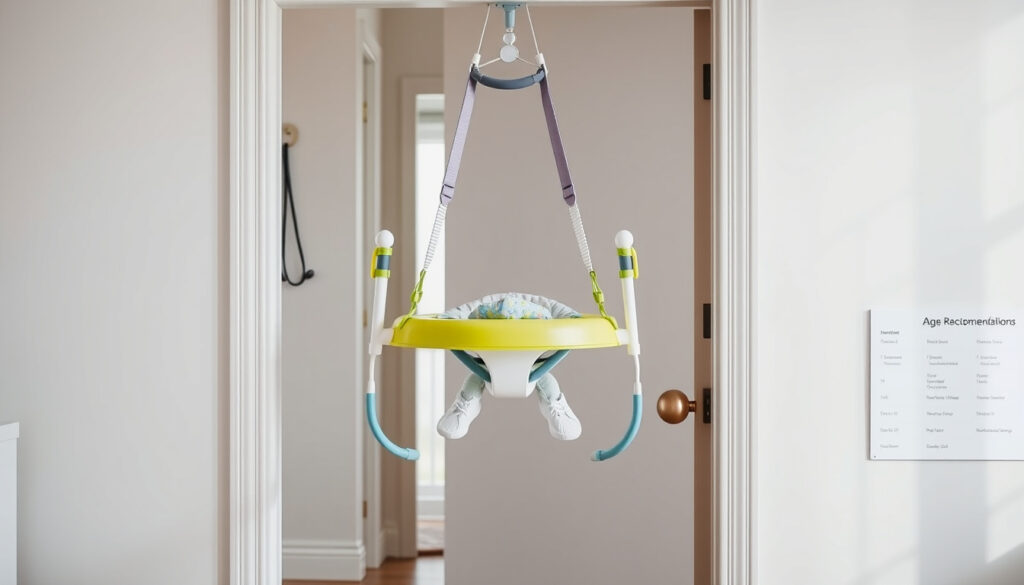
Jolly Jumper: Good or Bad? Age, Safety & Pediatrician Advice
Few baby products spark as much debate among parents as the Jolly Jumper — it’s fun for little ones, but pediatricians keep raising red flags. If you’ve ever watched a baby bounce happily in one and wondered whether it’s really safe, you’re not alone. This evidence-based guide walks through the age guidelines, the potential harms, and what the experts actually recommend, so you can make a confident call.
Minimum age recommendation: 3 months (when baby can hold head up) ·
Maximum weight limit: 28 lbs (12.7 kg) ·
Pediatrician consensus: Most pediatricians advise against using jumpers due to hip dysplasia and injury risk ·
Typical usage duration per session: 10–15 minutes, no more than 20 minutes per day ·
AAP stance: American Academy of Pediatrics recommends against baby walkers and jumpers
Quick snapshot
- Jolly Jumper should not be used before 3 months of age (Children’s Hospital Los Angeles)
- The American Academy of Pediatrics recommends limiting time in confining gear such as jumpers (Children’s Hospital Los Angeles)
- Whether moderate use causes long-term hip problems remains uncertain
- The exact amount of daily jumper time that is safe for all babies is not known
- Minimum age: 3 months with head control (Children’s Hospital Los Angeles)
- Stop at manufacturer weight limit (typically 25–30 lbs) or when baby can pull up (Children’s Hospital Los Angeles)
- Families are increasingly seeking safer alternatives like stationary activity centers and floor play
- Pediatric guidance may update as more research on jumper-related hip development becomes available
Six key specifications for the Jolly Jumper, drawn from the manufacturer and expert guidelines:
| Specification | Value |
|---|---|
| Product Type | Baby jumper/exerciser |
| Brand | Jolly Jumper |
| Minimum Age | 3 months |
| Maximum Weight | 28 lbs (12.7 kg) |
| FDA Clearance | Not FDA regulated as medical device |
| Pediatrician Rating | Generally not recommended |
Are Jolly Jumpers good or bad for babies?
Potential benefits of Jolly Jumpers
Jolly Jumpers are marketed as a way for babies to strengthen leg muscles and burn off energy. The bouncing action can be entertaining, and some parents report that it temporarily soothes a fussy baby. However, these are anecdotal perks, not evidence-based advantages. The Children’s Hospital Los Angeles states there is not a proven association between jumper use and positive developmental outcomes.
Risks and concerns
The main concerns center on hip development and injury risk. CHLA warns that baby equipment should not forcibly push a baby’s legs together or keep them in an extended position, as that can impede hip development. The American Academy of Pediatrics recommends limiting time in confining gear like jumpers because it can delay motor milestones.
- Risk of falls from the door frame or stand
- No long-term benefits proven (Children’s Hospital Los Angeles)
- May encourage toe-walking patterns
What the evidence says
When you stack the evidence, the potential harms outweigh the benefits. Nebraska Medicine advises waiting until a child has head and trunk control to sit without assistance before using items that can hinder hip development — and many babies don’t achieve that until 4–6 months, well past the 3-month label.
A few minutes of bouncing may amuse a baby, but the risk of delaying gross motor skills and straining immature hips is a steep price for that convenience.
The pattern: an engaging toy that pediatricians consistently advise against, with no proof of lasting benefit and real potential for harm.
What age should you use a Jolly Jumper?
Minimum age requirements
The manufacturer recommends the Jolly Jumper from 3 months of age up until the baby can walk. But age alone isn’t enough — the baby must have good head control. CHLA explicitly says babies should have good head control before using a jumper. Many 3-month-olds are still developing that.
Signs of readiness
- Can hold head up steadily when supported
- Has trunk control to sit briefly with support (Nebraska Medicine)
- Weighs at least the lower limit (no specific lower bound, but must be past newborn fragility)
Nebraska Medicine stresses that timing varies by child and recommends discussing with a pediatrician before introducing a jumper.
How long can a baby use a Jolly Jumper?
Even for babies who meet readiness criteria, usage should be capped. CHLA advises stopping at the manufacturer’s weight limit — typically 25 to 30 pounds — or when the child can pull up on the edge of the seat. Sessions should be limited to 10–15 minutes, no more than 20 minutes total per day according to pediatric consensus.
What this means: the 3-month label is a floor, not a green light. Most babies aren’t ready until 4–5 months, if at all.
What do pediatricians say about baby jumpers?
Official pediatrician recommendations
The American Academy of Pediatrics recommends against baby walkers and jumpers. The AAP policy, reinforced by the American Family Physician summary, states that confining equipment can delay motor milestones. The Canadian Paediatric Society similarly advises against jumpers for healthy infants.
Concerns about hip dysplasia
Jumpers can put strain on a baby’s hip joints. A Canadian child-therapy resource explicitly excludes infants with hip dysplasia from using walkers, jumpers, or exersaucers without physician direction. CHLA, however, notes that a proven association between jumper use and hip dysplasia has not been established — so the risk is debated but not discounted.
Alternatives pediatricians recommend
- Floor play and supervised tummy time
- Stationary activity centers (no wheels or springs)
- Safe baby gyms that encourage reaching and rolling
Most pediatricians agree that unstructured floor time is superior for motor development. The AAP guidance also recommends hip screening at every well-baby visit through 12 months, which reinforces the importance of natural hip positioning.
If your pediatrician says “skip the jumper,” they’re following the AAP, CPS, and NHS — not just personal opinion. That collective clinical weight is hard to ignore.
The collective clinical weight of these organizations makes a strong case against routine jumper use.
What are the disadvantages of using a Jolly Jumper?
Physical development risks
- May delay independent walking (Children’s Hospital Los Angeles)
- Can encourage toe-walking patterns
- Prolonged use may strengthen calf muscles at the expense of other muscle groups
Injury and accident risks
The door clamp design poses an inherent fall risk. A baby can tip sideways or the clamp can slip. The CTFRC document excludes infants described as “floppy or stiff” and those who put weight only on their toes, highlighting that not every baby is physically suited for this product.
Impact on sleep and behavior
Some parents report that excessive bouncing overstimulates or exhausts their baby, leading to fussiness rather than calm. Because no rigorous studies exist, these effects remain anecdotal, but they’re commonly shared in parenting forums.
The catch: each disadvantage circles back to the same point — the Jolly Jumper offers no proven benefit for the risks it carries.
Is Jolly Jumper bad for babies’ hips?
How jumpers affect hip development
When a baby sits in a jumper, their legs dangle and the seat forces the thighs together — a position that strains the hip joints. CHLA warns that equipment that pushes a baby’s legs together or holds them in an extended position can lead to abnormal hip growth. However, the same source states that a proven link between jumper use and hip dysplasia has not been confirmed. So the risk is biomechanically plausible but not statistically nailed down.
Signs of hip dysplasia
- Asymmetry in leg folds or buttocks
- One leg shorter than the other
- Limited ability to splay legs outward
The AAP recommends physical examination at every well-baby visit through 12 months (American Family Physician). Babies with risk factors (family history, breech position, female sex) should be extra cautious.
Safe alternatives for hip health
- Floor-based play: tummy time, rolling, crawling
- Exersaucers that allow legs to move freely in a natural position
- Baby carriers that support the hips in a wide, frog-like position
For babies already diagnosed with hip dysplasia, the CTFRC is clear: no jumpers or exersaucers without explicit doctor approval.
Two key specifications, one pattern: weight and age limits are clear, but the real cut-off is developmental readiness, not just the numbers on the package.
| Feature | Specification |
|---|---|
| Age range | 3 months to walking age |
| Weight limit | 28 lbs (12.7 kg) |
| Mounting | Door clamp (included) or optional stand |
| Seat type | Padded, adjustable height |
| Power | Baby’s own leg movement — no batteries |
| Cleaning | Seat cover usually machine-washable |
| Safety compliance | ASTM F2012-18 (standard for baby jumpers) |
The pattern: weight and age limits are clear, but developmental readiness is the true gatekeeper.
Upsides & Downsides
Upsides
- Entertains baby for short periods
- Portable and easy to set up on door frames
- Encourages leg strengthening (though not proven superior to floor play)
- Relatively inexpensive compared to large activity centers
Downsides
- Pediatricians widely advise against use
- Potential to delay motor milestones
- Hip strain, especially for at-risk babies
- Fall and injury risk from door clamp
- No proven developmental benefits
- Limited use window (few months)
What we know and what’s still open
Confirmed facts
- Not safe before 3 months or without head control (Children’s Hospital Los Angeles)
- AAP recommends against jumpers (American Family Physician)
- Injury risk from falls is real (Children’s Hospital Los Angeles)
- Maximum weight: 28 lbs (manufacturer specification)
What’s unclear
- Whether modest use causes long-term hip problems
- Precise safe daily duration for each baby
- Individual variation in tolerance
- Whether Jolly Jumpers can cause toe-walking patterns is not proven
The pattern: cautious use with clear limits is the most prudent approach.
Expert perspectives
“Babies should have good head control before using a jumper. Additionally, baby equipment should not forcibly push a baby’s legs together or keep them in an extended position because that can impede hip development.”
— Children’s Hospital Los Angeles (pediatric health system)
“Wait until a child has head and trunk control to sit without assistance before using baby items that can hinder hip development. Discuss timing with your pediatrician, because developmental milestones vary by child.”
— Nebraska Medicine (university health system)
“Infants with hip dysplasia or those who are premature, floppy, or stiff should not be placed in walkers, jumpers, or exersaucers without physician direction.”
— CTFRC (Canadian child-therapy resource)
These expert warnings underscore the need for careful consideration.
So what’s the real takeaway?
The Jolly Jumper is a product that delivers short-term entertainment without proven developmental payoff, and it carries real concerns that pediatricians have flagged for years. For parents in Canada and the U.S., the choice is clear: skip the jumper and invest in floor play, stationary activity centers, and tummy time — or use the jumper only sparingly, under strict limits, and never before baby is truly ready. For families whose babies have hip risk factors or developmental delays, the professional consensus is a firm no. The safest gear is often the simplest: a blanket on the floor and your watchful eye.
ctfrc.com, scienceinsights.org, myfootdr.com.au, blisstulle.com, emedicinehealth.com, hss.edu, thepedipals.com, nebraskamed.com
Frequently asked questions
How does a Jolly Jumper work?
The Jolly Jumper is a fabric seat suspended by springs from a door frame clamp or a free-standing stand. The baby sits in the seat with legs hanging through holes, and by bouncing or kicking, they create a jumping motion. The height is adjustable to keep feet flat or slightly touching the floor.
What are the safety concerns with Jolly Jumpers?
Safety concerns include falls from the door clamp, the potential to delay motor development, and hip strain. The AAP and CHLA advise limiting use and recommend against using them for babies who cannot hold their head up or who have hip instability.
Are there any alternatives to Jolly Jumpers?
Yes – stationary activity centers (exersaucers), floor play mats, baby gyms, and supervised tummy time are all safer and more developmentally beneficial alternatives. Parents can also use baby swings that don’t force hip adduction.
Can a 2 month old go in a Jolly Jumper?
No. The manufacturer specifies a minimum age of 3 months, and pediatricians stress that babies must have good head control before using any jumper. A 2-month-old typically cannot hold their head up steadily and should not be placed in a jumper.
Do pediatricians recommend Jolly Jumpers?
Most pediatricians do not recommend jumpers. The AAP and Canadian Paediatric Society advise against products that force a baby’s legs together and limit natural movement. For healthy babies, occasional short use is not catastrophic, but it’s not encouraged.
Is Jolly Jumper with stand safer than door clamp?
A stand can eliminate the risk of the door clamp slipping or damaging the door frame, but it introduces its own tipping risk if not properly weighted. The developmental and hip concerns remain the same regardless of mounting method.
These answers summarize current expert guidance on safe jumper use.
Related reading
For more on child development stages and parenting approaches, see Growing Up: Meaning, Stages, and Parenting Challenges (Canada Current).
More related posts
 Prayer Times in Montreal Today: Fajr, Dhuhr, Asr, Maghrib, Isha
 Kevin Federline’s Life After Britney: Fatherhood & Memoir
 Jennifer Candy Now: Where Is John Candy’s Daughter
 Anupam Kher: Children, Wives, Hair Loss, Wife’s Illness
 Liverpool – Paris-SG – 3-1 Quarter-Final Result and History
 Larry King: Cause of Death, Net Worth, and Marriages
 MLB The Show 26: Release Date, Platforms, Worth It?
 Area Code 236 Canada: BC Location, Scams and Lookup