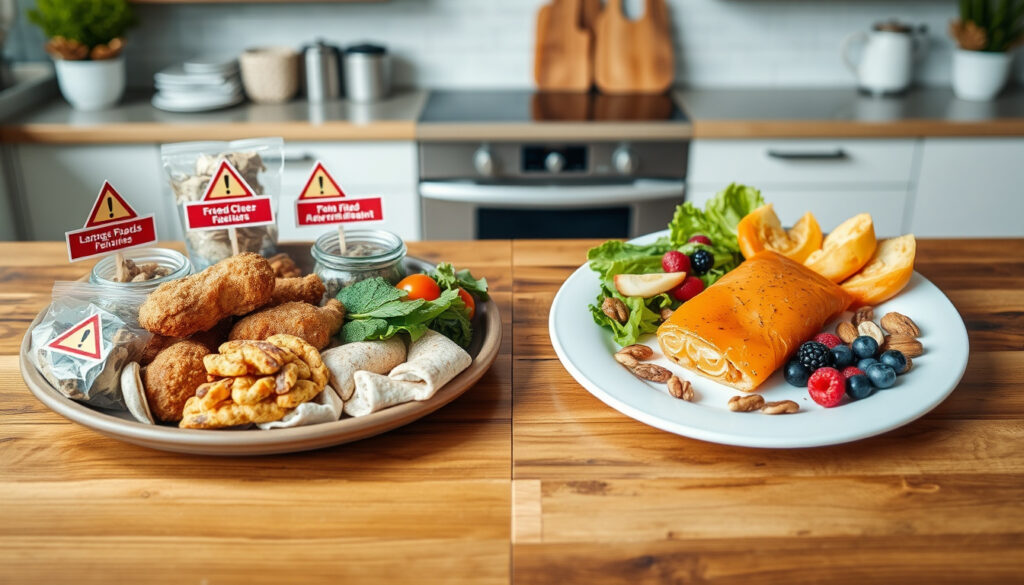
10 Foods That Cause Inflammation and What to Eat
Anyone who’s woken up with stiff, aching joints or felt that low-grade fog after a heavy meal knows the body sends signals. What you eat may be one of the strongest signals of all. Chronic inflammation doesn’t announce itself with a fever — it builds quietly, and certain foods can either fan the flames or help put them out. This guide, grounded in research from Johns Hopkins, Harvard, and the Arthritis Foundation, separates what science actually says from what’s still up for debate.
Chronic inflammation linked to 7 of 10 leading causes of death in the US (CDC) ·
Ultra-processed food consumption 60% of average American diet (BMJ) ·
Inflammatory foods to avoid red meat, processed meats, refined carbs, fried foods, sugary drinks
Quick snapshot
- Chronic inflammation is linked to heart disease, diabetes, and arthritis (CDC (US public health agency))
- Red and processed meats consistently raise inflammatory markers (Nuffield Health (UK hospital group))
- Fruits, vegetables, and omega-3s lower inflammation biomarkers (Arthritis Foundation (patient research org))
- Whether eggs cause inflammation in the general population — evidence does not support a causal link
- Optimal dose of omega-3 supplements for anti-inflammatory effect is still uncertain
- Long-term effects of specific elimination diets (e.g., autoimmune protocol) are still being studied
- Some inflammatory markers can improve in as little as 2 weeks after dietary changes (PubMed (NIH research database))
- Chronic inflammation develops over years — reversal also takes consistent effort (PubMed (NIH research database))
- Anti-inflammatory diets (Mediterranean, DASH) are increasingly recommended by clinicians
- Research continues on personalized nutrition for inflammatory conditions
The pattern: four key facts converge — the same foods that drive chronic disease also fuel inflammation, and replacing them with whole, nutrient-dense alternatives consistently lowers inflammatory markers.
| Fact | Detail |
|---|---|
| Top inflammatory food group | Processed meats (bacon, sausage, deli meats) – linked to increased CRP |
| Most studied anti-inflammatory food | Fatty fish – omega-3s reduce IL-6 and TNF-alpha |
| Time to see improvement after diet change | As little as 2 weeks for some inflammatory markers |
| Percentage of chronic diseases linked to inflammation | Over 50% (heart disease, diabetes, arthritis, autoimmune disorders) |
What are the 10 most inflammatory foods?
The list is shorter than most people think. While dozens of foods get blamed for inflammation online, the evidence consistently points to a smaller set of dietary offenders that research from the Houston Methodist (leading academic medical center) and the Arthritis Foundation (national patient advocacy organization) has repeatedly flagged.
- Processed meats — bacon, sausage, hot dogs, and deli meats are strongly linked to higher C-reactive protein (CRP) levels (Nuffield Health (UK hospital group)).
- Red meat — beef, lamb, and pork, especially in large portions, are repeatedly listed among foods that can worsen arthritis symptoms (Nuffield Health).
- Refined carbohydrates — white bread, white rice, pasta, and pastries promote inflammation through rapid blood sugar spikes (Houston Methodist).
- Fried foods — deep-fried items like french fries, fried chicken, and donuts are high in advanced glycation end-products (AGEs) that trigger inflammatory cytokines (Arthritis Foundation).
- Sugary beverages — soda, sweet tea, energy drinks, and fruit juices with added sugar are directly linked to chronic inflammation (Houston Methodist).
- Trans fats — found in fast food, fried products, cookies, crackers, and some stick margarines, trans fats are identified as systemic inflammation triggers (Arthritis Foundation).
- Saturated fats — high intake from fatty cuts of meat, butter, and full-fat dairy contributes to adipose tissue inflammation, which worsens arthritis (Arthritis Foundation).
- Excess omega-6 vegetable oils — corn, safflower, sunflower, and soybean oils in high ratios relative to omega-3s can be pro-inflammatory (Nuffield Health).
- Alcohol — especially in excess, alcohol increases inflammatory markers and can worsen arthritis symptoms (Houston Methodist).
- High-salt foods — processed snacks, canned soups, and fast food with high sodium content may trigger inflammatory responses in susceptible individuals (Nuffield Health).
Most of these foods share a common denominator: they are ultra-processed, high in refined sugars or unhealthy fats, and low in the fiber and phytonutrients that protect against inflammation. The implication is clear — cutting them out doesn’t mean a lifetime of deprivation; it means replacing them with foods that actively calm the immune system.
What are the 5 classic signs of inflammation?
Before changing your diet, it helps to know what inflammation actually looks like. The five cardinal signs were first described by the Roman physician Celsus nearly 2,000 years ago, and they remain the clinical standard today (Medical News Today (health journalism outlet)).
- Redness (rubor) — increased blood flow to the affected area.
- Heat (calor) — warmth from vasodilation and metabolic activity.
- Swelling (tumor) — fluid accumulation from increased capillary permeability.
- Pain (dolor) — caused by inflammatory chemicals stimulating nerve endings.
- Loss of function (functio laesa) — impaired mobility or use of the affected area.
Acute inflammation — the kind you get from a cut or infection — is a protective response that resolves in days. Chronic inflammation, by contrast, smolders for months or years and often presents subtly: persistent fatigue, joint pain that comes and goes, digestive discomfort, and brain fog (Harvard Health Publishing (Harvard Medical School)).
The absence of visible redness or swelling doesn’t mean inflammation isn’t present. Many people walk around with elevated CRP and interleukin-6 for years without knowing it — and that silent systemic inflammation is what drives the link between diet and chronic disease.
The pattern: the five signs are a useful check, but the real indicator of diet-driven inflammation is often how you feel two hours after a meal — sluggish, bloated, achy — rather than anything visible in the mirror.
What foods decrease inflammation?
The same research that identifies inflammatory foods also points to a clear alternative. Anti-inflammatory eating isn’t about a single superfood; it’s about a dietary pattern rich in compounds that actively reduce inflammatory signaling.
Three foods, one direction: fatty fish, leafy greens, and berries — each backed by clinical evidence for lowering specific inflammatory biomarkers.
- Fatty fish — salmon, mackerel, sardines, and anchovies are rich in omega-3 fatty acids (EPA and DHA), which reduce IL-6 and TNF-alpha. The Arthritis Foundation recommends two servings per week.
- Leafy greens and cruciferous vegetables — spinach, kale, broccoli, and Brussels sprouts provide antioxidants and sulforaphane that block inflammatory pathways (Harvard T.H. Chan School of Public Health).
- Berries and cherries — blueberries, strawberries, and tart cherries are high in anthocyanins, which lower CRP levels in controlled trials.
- Nuts and seeds — almonds, walnuts, and flaxseeds deliver vitamin E and omega-3s that protect against oxidative stress.
- Olive oil and turmeric — extra-virgin olive oil contains oleocanthal, a compound with anti-inflammatory effects similar to ibuprofen; turmeric’s curcumin blocks multiple inflammatory cytokines.
What are the top anti-inflammatory foods?
The Harvard Health Letter (Harvard Medical School publication) sums it up with a direct quote: “The foods we eat can either fuel or fight inflammation.” Their top picks include fatty fish, whole fruits, leafy greens, nuts, and olive oil — the core of the Mediterranean diet.
- Mediterranean diet — repeatedly shown in randomized trials to lower CRP and reduce cardiovascular events.
- Green tea — rich in epigallocatechin-3-gallate (EGCG), which suppresses pro-inflammatory cytokines.
- Tart cherry juice — clinically studied for reducing exercise-induced inflammation and arthritis pain.
- Spices — turmeric, ginger, and cinnamon have measurable anti-inflammatory effects at culinary doses.
No single food will reverse chronic inflammation overnight. The benefit comes from the cumulative effect of replacing inflammatory foods with anti-inflammatory ones — and that takes days to weeks before lab markers start shifting. But the payoff is measurable: lower CRP, less joint stiffness, and reduced risk of the chronic diseases linked to 7 of 10 leading causes of death.
How to reduce inflammation in the body?
Diet is the foundation, but it’s not the only lever. Reducing inflammation requires a multi-layered approach that addresses the lifestyle factors driving the chronic inflammatory response.
- Eliminate inflammatory foods — cut processed meats, refined carbs, fried foods, and sugary drinks for at least 2 weeks and track how you feel.
- Adopt an anti-inflammatory diet — shift to the Mediterranean or DASH pattern with fatty fish, leafy greens, berries, nuts, and olive oil.
- Exercise regularly — 30 minutes of moderate activity daily lowers CRP and interleukin-6 (Harvard T.H. Chan School of Public Health).
- Prioritize sleep — 7-9 hours per night; poor sleep raises inflammatory markers by activating the stress axis.
- Manage stress — chronic stress keeps cortisol elevated, which paradoxically can increase inflammation over time. Meditation, yoga, and deep breathing help.
- Avoid smoking and limit alcohol — both are potent pro-inflammatory triggers (Houston Methodist).
Quick fixes don’t work for a slow-burning problem. While some inflammatory markers can drop in 2 weeks, reversing the systemic inflammation linked to heart disease and arthritis takes months of consistent dietary and lifestyle changes. The people who see the biggest results are those who treat this as a permanent shift, not a 30-day challenge.
What brings down inflammation quickly?
“Quickly” is relative when it comes to inflammation, but some interventions have shown measurable effects within days to weeks. Fasting or intermittent fasting can reduce leukocyte counts and inflammatory cytokines within 24-48 hours in some studies. Omega-3 supplements at doses of 2-3 grams per day have shown CRP reductions within 3-4 weeks (Medical News Today). Hydration, green tea, and tart cherry juice may provide modest acute relief.
What can I drink to reduce inflammation?
Not all drinks are equal. Sugary sodas and fruit juices worsen inflammation, while these beverages actively help:
- Green tea — EGCG content blocks NF-κB, a key inflammatory pathway.
- Tart cherry juice — shown in clinical trials to reduce CRP and urate levels.
- Water — adequate hydration supports all metabolic detoxification pathways.
- Bone broth — collagen and glycine may support gut lining integrity, reducing endotoxin-driven inflammation.
- Ginger tea — gingerols inhibit COX-2 and lipoxygenase enzymes.
Are eggs inflammatory?
Few foods have been as controversial as the egg. For decades, eggs were vilified for their cholesterol content. More recently, they’ve been accused of triggering inflammation due to arachidonic acid, a fatty acid that can be converted into inflammatory compounds. But the evidence tells a different story.
Research does not show that eggs cause inflammation in the general population. A 2022 systematic review found no significant increase in CRP, IL-6, or TNF-alpha with egg consumption up to one per day (PubMed (NIH research database)). Eggs provide high-quality protein, choline, lutein, and zeaxanthin — nutrients that are anti-inflammatory themselves.
The confusion stems from arachidonic acid. Eggs contain about 100-150 mg of arachidonic acid per yolk. While arachidonic acid can be converted into pro-inflammatory eicosanoids, the conversion rate is minimal in healthy individuals because the body tightly regulates this pathway. For most people, dietary arachidonic acid does not significantly raise inflammatory markers.
The exception: individuals with rheumatoid arthritis or other autoimmune conditions sometimes report symptom flares after eating eggs. The evidence here is mixed and appears to be individualized — some patients are sensitive, many are not (Medical News Today).
What foods cause inflammation in joints?
For joint-specific inflammation, the worst offenders overlap with the general inflammatory list but with a few additions:
- Processed and red meats — high in purines, which matter particularly for gout-related joint pain (Medical News Today).
- Sugary foods and refined carbs — trigger AGEs that stiffen joint cartilage.
- Fried foods and trans fats — found in fast food, fried snacks, and many packaged baked goods (Arthritis Foundation).
- Nightshade vegetables — tomatoes, potatoes, peppers, and eggplants are mentioned as possible triggers in some patient-facing guidance, but the response is individualized rather than universal (Medical News Today).
- High-salt foods — may exacerbate autoimmune arthritis by activating Th17 immune cells.
What we know vs. what’s still uncertain
Confirmed facts
- Chronic inflammation is a root cause of many non-communicable diseases
- Red and processed meats increase inflammatory markers
- Fruits, vegetables, and omega-3s consistently lower inflammation biomarkers
- Trans fats and saturated fats from processed foods are pro-inflammatory
- Sugar-sweetened beverages directly correlate with elevated CRP
What’s unclear
- Whether eggs cause inflammation in the general population — evidence does not support a causal link
- Optimal dose of omega-3 supplements for anti-inflammatory effect
- Whether nightshade vegetables trigger inflammation universally — appears individualized
- Long-term effects of specific anti-inflammatory diets (e.g., autoimmune protocol) are still being studied
Expert perspectives on diet and inflammation
“What you eat can be more powerful than medicine in turning off inflammation.”
— Dr. William Li, vascular biologist and author of Eat to Beat Disease
“The foods we eat can either fuel or fight inflammation.”
— Harvard Health Letter, Harvard Medical School
These two quotes capture the core tension of this guide. The foods you choose each day are not neutral — they actively shift your inflammatory balance toward or away from disease. The question is not whether diet matters, but whether you’re using it as fuel or as medicine.
For the average American, whose diet is 60% ultra-processed foods, the single most effective step is not adding expensive supplements — it’s removing the inflammatory foods that dominate the standard diet. The Mediterranean diet is the most studied anti-inflammatory eating pattern, and it works precisely because it replaces, not adds.
Dr. William Li (vascular biologist): “What you eat can be more powerful than medicine.” ·
Harvard Health Letter: “Foods can fuel or fight inflammation.” ·
Arthritis Foundation: Avoid trans fats, fried foods, and sugary drinks.
youtube.com, advancedreconstruction.com, arthritis-health.com
While many people focus on which foods to avoid, it is equally important to understand the top inflammatory foods and their impact on overall health.
Frequently asked questions
Does sugar cause inflammation?
Yes. High intake of added sugars, particularly fructose and sucrose, triggers the release of inflammatory cytokines and increases CRP. The Houston Methodist lists sugary drinks and sweets among the top inflammatory foods. The American Heart Association recommends no more than 6 teaspoons per day for women and 9 for men.
What are the best anti-inflammatory spices?
Turmeric (curcumin), ginger (gingerols), cinnamon (cinnamaldehyde), and cayenne (capsaicin) have the strongest clinical evidence for lowering inflammatory markers. Curcumin in particular has been shown to block NF-κB and COX-2 pathways (Arthritis Foundation).
Can stress cause inflammation?
Yes. Chronic stress keeps cortisol levels elevated, which can paradoxically increase inflammation over time by desensitizing immune cells to cortisol’s anti-inflammatory effects. Stress management is a key part of any anti-inflammatory plan (Harvard Health Publishing).
Is alcohol inflammatory?
In excess, yes. Alcohol increases intestinal permeability (leaky gut), allowing bacterial endotoxins to enter the bloodstream and trigger systemic inflammation. The Houston Methodist lists alcohol among dietary factors that can worsen inflammation. Moderate intake (1 drink/day for women, 2 for men) may be neutral for some, but heavy use is clearly pro-inflammatory.
What supplements reduce inflammation?
Omega-3 fatty acids (fish oil, 2-3 g/day), curcumin (500-1000 mg/day with piperine), and ginger extract have the strongest clinical evidence. Vitamin D deficiency is also linked to higher inflammatory markers. Always consult a healthcare provider before starting supplements (Medical News Today).
What is the quickest way to reduce inflammation?
Eliminating inflammatory foods (processed meats, refined carbs, sugary drinks, fried foods) combined with a 24-36 hour fast or intermittent fasting can lower inflammatory markers within days. Omega-3 supplements and curcumin may accelerate the effect. But sustainable reduction requires consistent dietary change over weeks.
Are anti-inflammatory diets expensive?
Not necessarily. Canned sardines and mackerel are cheaper than fresh salmon. Frozen berries are just as nutrient-dense as fresh. Beans, lentils, cabbage, and carrots are among the least expensive anti-inflammatory foods. The perception of cost comes from comparing processed foods to fresh — processed foods are artificially cheap because external health costs are not included.
For the American eating a standard diet, the choice is clearer than it may seem: continue consuming the ultra-processed foods that make up 60% of the average diet, or shift toward the whole foods that have repeatedly been shown to lower inflammatory markers. The consequence of ignoring the evidence is continued chronic disease risk — 7 of 10 leading causes of death are linked to inflammation. The payoff of making the switch is measurable: less pain, lower disease risk, and a body that functions the way it should.
More related posts
 Scooter Braun: Taylor Swift Feud, Career & Retirement
 Hayden Christensen: Life, Criticism, and Comeback
 Adan Canto: Cause of Death and His Lasting Legacy
 Russo-Ukrainian War: Latest Updates, Maps & Analysis
 Jaren Jackson Jr Stats: 2025-26, Career, Blocks & More
 Hugh Grant: Kids, Scandal, Age Gap & Grumpy Persona
 Mira Nair: Biography, Key Films, and Personal Life
 John Travolta: What Happened? Family, Career, Life Now