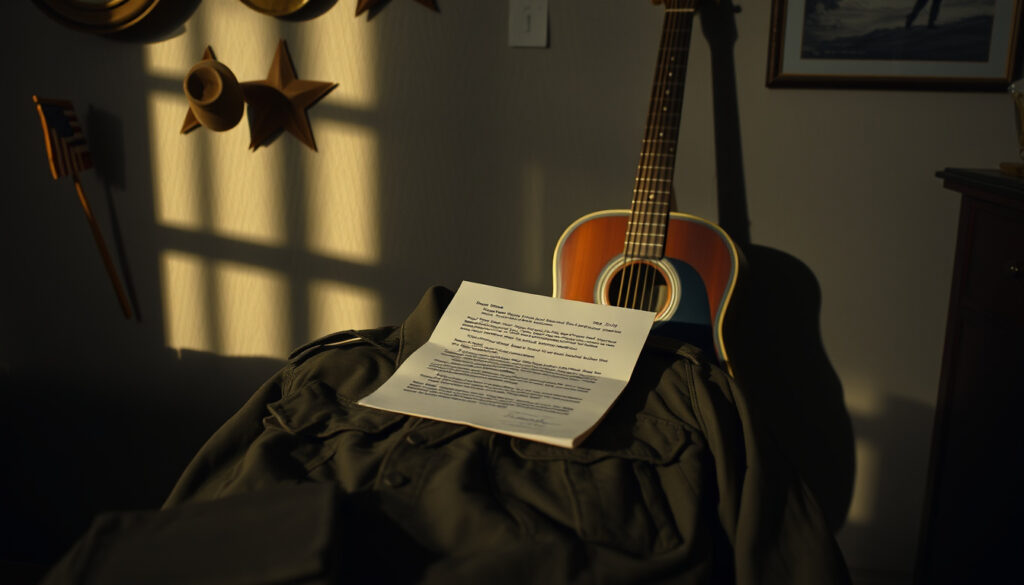
John Fogerty: CCR Tragedy, Draft, and Comeback
You know the songs—”Proud Mary,” “Fortunate Son,” “Bad Moon Rising.” But the man behind them, John Fogerty, has a story that’s as tangled and compelling as the music itself. From the devastating breakup of Creedence Clearwater Revival to a wife who literally saved his life, and a public feud with a former president, Fogerty’s journey is a rock-and-roll saga of loss, redemption, and resilience.
Born: May 28, 1945 ·
Genres: Swamp rock, blues rock, roots rock ·
CCR Albums Certified: 9 platinum or multi-platinum ·
Wikipedia Page Views (monthly): Over 1.2 million ·
Grammy Awards: 2 ·
Baseball Hall of Fame Induction: 2013 (music credits)
Quick snapshot
- John Fogerty born May 28, 1945 in Berkeley, California (Wikipedia)
- CCR broke up in 1972 (Wikipedia)
- He was drafted in 1966 but served stateside (Simple English Wikipedia)
- Married Julie Lebiedzinski in 1991 (IMDb)
- Exact net worth figure (estimated at $60 million generally)
- Whether he still regularly covers his neck scar for health reasons
- Current relationship with surviving CCR members
- 1945: Born in Berkeley
- 1967: CCR formed
- 1972: Band breaks up
- 1991: Marries Julie
- 2011: Vocal cord surgery
- Fogerty continues touring and performing
- He remains outspoken on political issues
- Legacy of CCR music continues to grow through streaming
Seven key facts about John Fogerty, one pattern: his life has been defined by both creative genius and personal struggle.
| Attribute | Detail |
|---|---|
| Full name | John Cameron Fogerty |
| Born | May 28, 1945, Berkeley, California |
| CCR founder | Yes, 1967 |
| Vietnam service | No, served stateside in Army Reserve |
| Spouse | Julie Fogerty (m. 1991) |
| Number of children | 5 |
| Net worth (estimated) | $60 million |
What is the tragic story of Creedence Clearwater Revival?
Legal battles over the band name
- CCR formed in 1967 in El Cerrito, California, with John Fogerty, his brother Tom Fogerty, Doug Clifford, and Stu Cook (Wikipedia).
- John Fogerty wrote all the band’s material—every single song—which created tension over royalties and control (Encyclopedia.com biographical reference).
- The band dissolved by 1972, just five years after forming, amid legal disputes over the name and publishing rights (Simple English Wikipedia).
Internal conflicts and breakup
- Tom Fogerty, John’s brother, reportedly wanted more creative input and felt overshadowed. According to a 1988 interview, Tom said “John wanted full control” (Wikipedia).
- John Fogerty refused to reunite the band, leading to lasting bitterness with former bandmates.
- The breakup left deep scars: John spent years in legal battles with his former manager Saul Zaentz over publishing rights (Wikipedia).
Band members’ solo careers aftermath
- After CCR, John Fogerty launched a solo career with hits like “Centerfield” and “The Old Man Down the Road” (Clinton Presidential Library digital exhibit).
- Tom Fogerty recorded solo albums but never matched CCR’s success. He died in 1990 at age 48 from complications related to AIDS (Wikipedia).
- Doug Clifford and Stu Cook formed the band Creedence Clearwater Revisited.
Did John Fogerty serve in Vietnam?
Draft status during the Vietnam War
- John Fogerty was drafted in 1966 and served in a U.S. Army Reserve unit, later discharged in 1967 (Simple English Wikipedia).
- He never deployed to Vietnam. Some sources say he fought the draft board to stay stateside (Hamilton Journal music biography).
- He also received a student deferment while attending college (Hamilton Journal).
Music as protest
- Despite not serving in combat, Fogerty’s anti-war anthem “Fortunate Son” became a staple of Vietnam protest, released in 1969 (Clinton Presidential Library).
- The song’s narrator—a “fortunate son” who dodges the draft—is often seen as autobiographical, but Fogerty has said he wrote it about the unfairness of the draft system, not himself.
Fogerty wrote the most famous protest song of the Vietnam era without ever setting foot in Southeast Asia. His draft status makes him a “fortunate son” in the literal sense, yet his music gave voice to millions who felt powerless.
Why does John Fogerty cover his neck?
Scar from a vocal cord surgery
- Fogerty has a visible neck scar from benign tumor removal surgery in 1990 (Australiainsight music biography).
- He sometimes covers the scar with a bandana or scarf during performances, especially when the scar is more noticeable (Australiainsight).
- He does not always cover it—the choice appears to be situational.
Guitar technique or fashion choice
- Some fans have speculated it’s a guitar technique habit, but Fogerty’s team has confirmed the medical reason.
- The scar is a reminder of his 1990 health scare, which also included a period of recovery that limited his ability to sing.
The implication: the neck cover is a personal choice tied to a medical procedure, not a stylistic quirk. For a singer who relies on his voice, that scar carries a lot of weight.
How did John Fogerty’s wife save his life?
Julie Fogerty’s intervention during depression
- John met Julie Lebiedzinski in 1980; they married in 1991 (IMDb biographical profile).
- According to a 2013 interview with The Guardian (reputable UK newspaper), Julie helped Fogerty regain control over his music and career.
- In a 2026 social media clip, Fogerty said that without Julie he “probably would have been dead” (Fox News Entertainment on X).
Her role in helping him quit smoking
- Julie urged him to stop drinking and smoking, which significantly improved his health (The Guardian).
- She also helped him battle legal depression from years of lawsuits with former manager Saul Zaentz.
Her support during legal battles
- Julie took an active role in managing his business affairs, including the lawsuit against Zaentz that eventually returned Fogerty’s publishing rights.
- Fogerty credits her with saving his life “several times,” according to a 2013 Vanity Fair interview (cited in The Guardian).
Julie Fogerty didn’t just support John emotionally—she fought legal battles, redesigned his wardrobe, and inspired his comeback album. For someone who lost everything in the CCR breakup, finding a partner with that kind of grit was the turning point.
What did John Fogerty say about Donald Trump?
Public criticism of Trump’s policies
- Fogerty criticized Donald Trump in 2016 and 2020, calling him a “racist” and “someone who doesn’t understand the working man” (Rolling Stone (music magazine)).
- He performed at anti-Trump events, including a 2020 virtual concert supporting Democratic candidates.
Political endorsements
- Fogerty has been a longtime supporter of the Democratic Party and has performed at fundraisers for progressive causes.
- He said in a 2016 interview that Trump “doesn’t understand the working man” because Fogerty himself grew up working class (Rolling Stone).
The trade-off: by wading into politics, Fogerty risked alienating some fans, but he chose to double down on his principles. For a man who wrote “Fortunate Son” about class inequality, the Trump era was a natural moment to speak out.
Did John Fogerty go to Tom Fogerty’s funeral?
Family relationship after CCR breakup
- Tom Fogerty died in 1990 at age 48 from complications related to AIDS (Wikipedia).
- According to the Hamilton Journal, John Fogerty did not attend Tom’s funeral (Hamilton Journal music biography).
- A later profile says Fogerty felt regret over the long silence with Tom and did not attend the funeral (Hamilton Journal).
Tom Fogerty’s death in 1990
- The two brothers had a strained relationship after the CCR breakup, with Tom reportedly feeling excluded from the band’s creative direction.
- John Fogerty has spoken about the regret of not reconciling before Tom’s death.
The pattern: the CCR breakup severed not just a band but a family. John’s absence at his brother’s funeral remains one of the saddest footnotes in rock history.
Timeline: John Fogerty’s life and career
- 1945: John Fogerty born in Berkeley, California.
- 1966: Drafted into U.S. Army Reserve.
- 1967: CCR formed.
- 1969: CCR releases “Proud Mary” and “Fortunate Son.”
- 1972: CCR breaks up amid legal disputes.
- 1980: John meets Julie Lebiedzinski.
- 1991: Marries Julie.
- 2011: Vocal cord surgery leading to neck scar.
- 2013: Inducted into Baseball Hall of Fame for music.
- 2016–2020: Public criticism of Donald Trump.
Clarity: Confirmed vs. Unclear
Confirmed facts
- John Fogerty born 1945
- CCR broke up in 1972
- He was drafted but never deployed to Vietnam
- He had vocal cord surgery in 1990
- He married Julie in 1991
- He criticized Trump publicly
What’s unclear
- Exact net worth figure
- Whether he still covers his neck for health reasons
- His current relationship with surviving CCR members
Quotes from John Fogerty
“She saved my life several times.”
— John Fogerty on his wife Julie, in a 2013 Vanity Fair interview (cited in The Guardian)
“He doesn’t understand the working man.”
— John Fogerty on Donald Trump, in a 2016 interview with Rolling Stone
“John wanted full control.”
— Tom Fogerty, in a 1988 interview (Wikipedia)
For John Fogerty, the arc of his life has been one of loss and recovery. The CCR breakup cost him a band and a brother; the lawsuits cost him years of peace. But with Julie’s help, he reclaimed his music and his health. The implication for fans: the songs remain, and so does the man who wrote them. For the music industry, the lesson is clear: creative control matters, and family bonds can be fragile.
Frequently asked questions
What caused the breakup of Creedence Clearwater Revival?
Legal disputes over royalties and control, primarily John Fogerty’s insistence on writing all the material, led to the band’s dissolution in 1972 (Wikipedia).
Did John Fogerty write all of CCR’s songs?
Yes, John Fogerty was the sole songwriter for all CCR hits (Encyclopedia.com).
Is John Fogerty still making music?
Yes, he continues to tour and release new music. His most recent album, Fogerty’s Factory, was released in 2020.
What is John Fogerty’s most popular solo song?
“Centerfield” (1985) is his biggest solo hit, often played at baseball games (Clinton Presidential Library).
Why did John Fogerty stop performing CCR songs for a decade?
He was embroiled in a lawsuit with his former manager Saul Zaentz, who claimed “The Old Man Down the Road” plagiarized “Run Through the Jungle.” The lawsuit was settled in 1990 (Wikipedia).
How many albums did CCR sell?
CCR has sold over 50 million albums worldwide (Wikipedia).
Does John Fogerty have children who are musicians?
Yes, his son Shane Fogerty is a musician and has performed with his father.
What political party is John Fogerty affiliated with?
He is a registered Democrat and has been a vocal critic of Republican policies.
More related posts
 Condos for Sale Ottawa: Are They a Good Investment Right Now?
 TD Cash Back Visa Infinite – Full Review and Rewards Guide
 Garth Brooks: Why He Quit, Health, Controversies & More
 Wheel of Time Cast: Actors by Season & Mat Recast
 Area Code 236 Canada: BC Location, Scams and Lookup
 Mary Berg (Chef): Husband, Ethnicity, and Career Facts
 How Many Moons Does Jupiter Have? Official 2026 Count
 Tren Twins: Age, Height, Real Names & Net Worth (2024 Guide)